Sensory corner ideas for small homes and smaller budgets
Plan a sensory corner around your child and your home, with small-space ideas, a no-shopping trial and practical questions before buying equipment.
You do not need a spare bedroom full of specialist equipment to make a little more room for your child. A useful sensory corner starts with a purpose, a space that works for your household and your child's own preferences.
Before choosing colours or adding anything to a basket, ask: is this somewhere to retreat from a busy room, somewhere to move, or both at different times? Those are different jobs. Planning around them can prevent an expensive collection of things that nobody enjoys using.
Start with the moment you want to make easier
Think of one everyday situation. Perhaps your child wants somewhere quieter after school. Perhaps they need room to move while the family shares the living room. Write that situation down before choosing equipment.
Invite your child into the decision in a way that suits them. Show two possible locations, let them try a cushion you already own, or notice where they choose to spend time. A photo of an attractive room cannot tell you what feels comfortable to its user.
Give quiet space and movement space different jobs
The Scottish Government's guidance on sensory-inclusive learning environments distinguishes restorative quiet areas from spaces intended to provide more sensory stimulation. That distinction is useful when thinking about a home, although school guidance is not a specification for your child's needs.
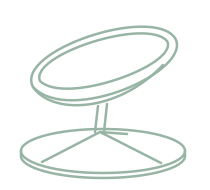
A quiet corner might begin with a familiar seat, a clear surface and less competing noise. A movement area needs the clearances, floor conditions and supervision appropriate to the exact activity. A spinning chair belongs in an area planned for its movement, rather than being squeezed between a sofa and a bookcase.
In a small home, the same room may serve both purposes at different times. A simple agreement about when equipment comes out can be more realistic than permanently dividing the room. Keep doors and everyday routes clear.
Try a no-shopping version first
Choose a short trial using items already available and suitable for your child:
- Move visual clutter away from one small area.
- Offer a familiar comfortable place to sit.
- Keep a few preferred books or age-appropriate objects within reach.
- Let your child choose whether background sound is wanted.
- Store unused items elsewhere so the space has a clear purpose.
These are organising ideas, not a treatment programme. Avoid adding scented items, flashing lights or sound simply because they appear in sensory-room photographs. More equipment does not automatically make a space more useful.
Spend on the problem you have actually identified
After trying the space, make three lists: keep, change and consider buying. Describe the reason for each possible purchase. “Our child wants a movement option, and we have measured a suitable area” is more helpful than “this is popular online”.
For a chair, measure the space it needs in use, not just its base. Check the specific model's age guidance, user-weight limit, access and assembly instructions. Think about where it will be stored and how an adult can supervise without blocking the route through the room.
Our spinning-chair checklist for children is a useful place to organise those questions. You can decide that no chair is needed, or that a different type of seat would be a better starting point.
Keep a simple household review
Ask everyone who uses the room what is working. Does your child choose the space? Can another person still move through the room? Is packing equipment away practical? Are the things within reach still appropriate for your child's age and habits?
Change one feature at a time where possible. That makes it easier to understand the difference between an appealing purchase and something that belongs in your everyday routine.
If you are planning a space around significant sensory or physical needs, discuss the layout and equipment with your child's relevant professional. This article offers household planning ideas, not an individual clinical assessment.
A small-home example you can adapt
Imagine a family sharing one living room. The child likes a familiar cushion after school, while the same floor area becomes a play space later. They do not need to make the room look like a therapy centre. They need to decide what comes out, when it is used and where it goes afterwards.
One possible arrangement is a comfortable, visible corner beside the sofa, with a small basket for a few familiar objects. The family keeps the route to the door clear and leaves any movement equipment packed away until there is room to use it according to its instructions. This is an example of organising a shared room, not a recommended layout for every home.
You could sketch your own version on paper. Draw the furniture that stays, mark doors and everyday walking routes, then add the area your child already chooses. Only consider new equipment after checking whether its required usable space can fit around those essentials.
Make a budget that includes the whole decision
The price beside a photograph is only one part of a purchase. Delivery, returns, storage and any manufacturer-specified accessories can change whether an item is practical. Keep those questions together so a tempting headline price does not become the deciding factor.
For each possible purchase, write a sentence explaining the job it would do. Then ask what you can try before buying. Could you rearrange existing furniture? Could the seller answer a missing fit question? Is there a suitable opportunity to see the exact item? These questions help you spend deliberately without assuming the cheapest option is always suitable.
A useful budget sheet can have four columns: item, reason, full cost to confirm and decision. Leave unknown costs marked as unknown. There is no need to set an impressive budget or buy everything at once. If an item has no clear job, put it back on the “consider later” list.
Keep the corner useful as family life changes
Choose a storage routine the adults in the home can manage on an ordinary busy evening. A basket that is easy to move may be more practical than a complicated display. Keep equipment instructions somewhere you can find them, separate from promotional leaflets and saved shopping screenshots.
Include your child when deciding what remains in the space. An object can stop being a favourite without anything having gone wrong. A younger sibling may also change what can be left within reach. Review access, condition and suitability as part of normal household tidying rather than waiting until the room becomes difficult to use.
For a first step today, write down the one moment you want the corner to support, clear a suitable area and offer a familiar choice. If a seating purchase still has a clear purpose after that trial, use the children's chair checklist to collect the details before following a retailer link. The aim is a space that belongs in your family's life, with room to change your mind.
Sources and further reading
- Scottish Government: quiet and sensory spaces , guidance written for learning environments.
- Sensory Chairs: sensory seat types explained .
Sensory Chairs is an Amazon affiliate site. We earn from qualifying purchases through our affiliate links. You do not need to buy anything to try the organising ideas above.