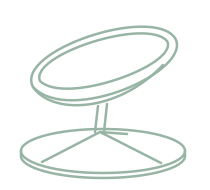
Spinning chair or sensory rocking chair? How the movements differ
Compare spinning and rocking seat designs using documented examples, with questions about movement, sitting position, space and model-specific guidance.
A spinning chair and a sensory rocking chair both offer movement, but they should not be treated as versions of the same seat. The direction of movement, sitting position and space needed can be quite different.
This is a guide to comparing designs, not a ranking or a hands-on product review. The named products below are documented examples. They are not the same products as the Amazon chairs featured elsewhere on Sensory Chairs, and their specifications should not be transferred to those listings.
Compare the movement before the marketing language
Start with what the seat actually does. A rotating seat moves around an axis. A rocker moves through a rocking action determined by its base. Product names can be broad, and some designs allow more than one type of movement, so look at the exact mechanism and instructions.
Gonge's Carousel model 2167 is one example of a rotating seat. The manufacturer describes an angled seat that the user can move by shifting their centre of gravity, with pushing from the feet as another way of starting it. Southpaw's Sensory Rockers are described as soft, contoured rocking chairs and are offered in different sizes.
Those descriptions establish design differences. They do not demonstrate that one product will suit a particular child's sensory or physical needs better.
Look at the sitting position
For each exact model, look at where the body rests, what the user can hold and how their feet are positioned. Do not infer postural support from an appealing photograph or the word “sensory”.
Ask whether the child can sit in the intended position, get on and off and use any grip points. If they need specific support or assistance with transfers, discuss that requirement with their relevant professional before choosing equipment.
An opportunity for movement and a seat for eating, writing or other tasks may be different purchases. A chair should not be reassigned to a job its instructions do not support.
Measure the usable area
Use two measurements in your comparison notes: the item's stated dimensions and the clear area its instructions require in use. A compact base does not necessarily mean a compact movement area.
Consider nearby furniture, access routes, other children and the space an adult needs to supervise. Think about the floor specified by the manufacturer and where the item will be kept. A design that fits in a photograph may not fit into the way your family uses a room.
Check the person and the exact model together
Before comparing prices, collect the same information for both options:
- Manufacturer and exact model or item number.
- Stated age guidance and maximum user weight.
- Seat dimensions and intended sitting position.
- How movement starts and how the user stops it.
- Assembly, inspection and cleaning instructions.
- Clear floor area and supervision requirements.
- Return arrangements and any opportunity to see or try the item first.
If a detail is missing, mark it as unknown and ask the seller or manufacturer. Do not borrow a limit from a similar-looking chair or assume that a larger size changes every other instruction.
Make a neutral choice
Write down the reason you are considering movement equipment and what would make an option unsuitable. Your child's preference matters, but so do access, fit, instructions and the intended setting.
There is no automatic rule that rocking is calming or spinning is alerting for everyone. This comparison cannot determine an individual response or replace professional advice. If the intended purpose is therapeutic, ask the professional recommending it to explain why this particular design is being considered.
Continue with the right questions
Our sensory seat-type guide explains other seating terms. If a rotating seat remains on your shortlist, the children's spinning-chair checklist will help you collect fit and space information before following a retailer link.
Build a comparison sheet that exposes the gaps
Place the two exact model names at the top of a page. Under each, record the same headings: movement, sitting position, starting and stopping, user guidance, space, assembly and ongoing care. Add the source of each answer, such as the manufacturer's instruction document or a written response from the seller.
Do not fill every box just to make the sheet look complete. “Not yet confirmed” is useful information. It tells you what to ask before a purchase and prevents a vague product description from turning into a fact in your own notes.
Keep advertised claims in a separate section from specifications. A stated dimension can help you assess a space. A statement that a product helps with a sensory need is a different kind of claim and should not be treated as an individual recommendation.
Consider two different household situations
Imagine one family looking for a movement option in a shared living room and another investigating a seat for a specific activity. The same comparison sheet could lead them to different questions. The first family may need to understand usable clearances and storage. The second needs to clarify whether the seat is intended for the proposed task at all.
Neither situation identifies a winner in advance. It explains why “which is best?” can be less useful than “which features matter for this person and this setting?” A product can be suitable for one intended use without being suitable for another.
Write your own situation above the comparison. Include who will use the item, where it will be used and the purpose you have discussed. If that purpose is therapeutic, keep the recommending professional's explanation with the model information rather than relying on a general product category.
Ask better questions before ordering
When contacting a seller, make the question specific enough to answer. Give the model name and ask for the relevant instruction document. If you need a measurement, explain which measurement is missing rather than asking whether the chair is “a good size”.
For returns, check the arrangement for the actual item and destination. Ask about assembly, packaging and any conditions relevant to an item being returned. Do not assume another retailer's policy applies, or that a photograph shows exactly what will arrive.
If a demonstration or suitable trial is available, use it to understand the mechanism and practical setup. A brief encounter should not be treated as proof of a lasting outcome. It can still help you identify a difficult transfer, an unclear control or a space requirement that would have been easy to miss online.
Leave yourself a clear reason to pause
Before buying, decide which unanswered questions would stop the purchase. Missing instructions, uncertain fit or an unclear intended use are good reasons to seek more information. There is no need to resolve an uncertainty by choosing whichever description sounds more reassuring.
You may also decide that neither option addresses your original purpose. That is a useful result from a comparison, not a wasted exercise. Keep the notes for a conversation with the relevant professional or for reviewing a different model later.
If a spinning seat remains a possibility, work through the children's chair checklist . If you still need to distinguish the product categories, read the seat-type guide . The next step is a clearer shortlist, with fewer assumptions and enough information to ask the right questions.
Manufacturer sources
This article compares published design information. We have not tested these named products or established their suitability for any individual. Sensory Chairs earns from qualifying purchases through its Amazon affiliate links; the manufacturer references above are provided as sources.