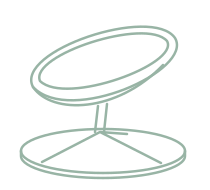
When your child enjoys spinning, you may wonder what the movement means to them and whether a spinning chair is worth exploring. Start with their experience rather than an expected outcome from a product.
Understanding spinning and stimming
Spinning can be a form of stimming: repeated movement that may bring enjoyment, express feelings or help a person feel settled. The meaning differs from person to person. The National Autistic Society describes these varied purposes in its guide to stimming .
For parents, noticing when and how your child chooses movement can be a useful starting point. An enjoyable activity is different from a treatment with a guaranteed effect.
Different people, different preferences
Balance and movement are part of the vestibular sense. Some autistic people seek more sensory input; others find particular sensations overwhelming, and preferences can vary. Read the National Autistic Society’s explanation of sensory processing for more background.
A chair one child enjoys may not suit another. Your child’s response matters more than a general claim about sensory products.
Questions to ask before choosing a chair
- Does your child enjoy this kind of movement?
- What age, size and weight guidance does the manufacturer give for the exact model?
- Do the instructions explain the space, assembly and supervision needed?
- Have you checked the seller, returns information and current product details?
Our chair comparison links to children’s and larger seating options. Check the current Amazon listing and manufacturer’s instructions before deciding.
For a more detailed selection checklist, explore spinning chairs for kids . If the different product names are confusing, start with what a sensory spinning chair is .
When individual support matters
If movement seems distressing or harmful, or you are uncertain about a product’s suitability, seek individual advice from your child’s occupational therapist or healthcare professional. This guide cannot assess your child’s needs or recommend a spinning routine.
Sensory Chairs is an affiliate website. We do not diagnose conditions or provide occupational therapy.
Why do some autistic children spin?
Why do some autistic children spin?
Spinning can be a form of stimming. Some people enjoy the sensation, express feelings through movement or use repeated movement to help feel settled. The reason differs between people and situations; enjoying spinning does not by itself establish a diagnosis.
Are spinning chairs good for every autistic child?
No single chair suits every autistic child. Some enjoy rotating movement and others find it uncomfortable. A product cannot promise a particular therapeutic result. Consider the child’s preferences, the manufacturer’s instructions and individual professional advice where needed.
These answers draw on the National Autistic Society’s stimming and sensory processing guidance linked below. They do not establish a treatment benefit from a chair.
Further reading
- National Autistic Society: repeated movements and behaviour (stimming)
- National Autistic Society: autism and sensory processing
For the family story behind this site, meet Matthew and Myles . For a question about the website, get in touch .