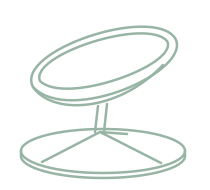
Vestibular activities for kids: movement beyond spinning
Explore questions about movement activities for children, including choice, familiar play, supervision and why spinning equipment is always optional.
When a child enjoys movement, it is easy to find long online lists of “vestibular activities”. The harder question is which ideas, if any, belong in that child's day. The best starting point is the person and the situation, rather than the length of the list.
This article introduces ways to discuss movement options. It does not prescribe exercises, a spinning routine or a sensory programme, and you do not need to buy equipment to use the planning questions.
Movement is a broad category
The vestibular sense is connected with movement and balance. Turning in a seat is one experience; a familiar walk, a change in body position or a balance activity is another. Do not assume that a child who enjoys one will enjoy all of them.
Norfolk and Suffolk NHS includes movement breaks and opportunities such as swinging, jumping and balancing in its sensory information. It also stresses that responses differ and that movement can overwhelm someone. These examples are possibilities to discuss, not a checklist to complete.
If the terminology is unfamiliar, read our introduction to vestibular input before choosing an activity on the basis of its label.
Begin with something familiar
Ask which movement your child already chooses and what they want to do next. The answer may be a walk to another room, returning to familiar play, or no extra movement at that moment. A predictable activity they know is easier to discuss than an unfamiliar exercise copied from a video.
You can make a simple choice card with two familiar, suitable options and a “not now” option. Use pictures, words or objects that make sense to your child. This is a communication idea, not a recommendation that any particular movement is suitable.
Give different ideas different questions
Rather than ranking activities by intensity, use questions that fit the situation:
- For a walk or change of location: is the route accessible and is an adult needed?
- For familiar active play: is there enough clear space and is the equipment suitable for this child?
- For an activity involving balance: has anyone advised on the support the child needs?
- For equipment that rotates: how does the user control and stop it, and what do its instructions require?
- For any new activity: who can advise before it is tried?
Avoid making household equipment into improvised movement equipment. A chair, cushion or storage box should not be used in a way its design and instructions do not support.
Make stopping part of the plan
Agree how your child can communicate “stop” or “something different”. Do not rely on a child verbally explaining discomfort if that is not how they usually communicate. Notice their usual signals and leave room for a change of mind.
Stop movement if the child appears unwell or uncomfortable. Do not use dizziness, endurance or completing a set number of turns as a target. Seek appropriate professional advice if symptoms or difficulties concern you.
Keep activity ideas separate from a treatment programme
A movement opportunity in family life is not automatically a sensory circuit or a sensory diet. Those terms may be used in a specific professional or school context. Ask what a proposed programme is for and how it has been adapted to your child.
Berkshire Healthcare's circuits guidance describes a planned sequence rather than a collection of interchangeable activities. If someone recommends that structure, discuss it with them rather than assembling your own version from product pages.
Where do spinning chairs belong?
A spinning chair is an optional equipment decision. It should not become the default answer to every request for movement, and this article does not identify one as suitable for your child.
If seating is something you are exploring, use the children's spinning-chair checklist to organise questions about the model, fit and space. If your main need is a break between tasks, our movement-break article focuses on everyday planning rather than equipment.
A movement menu can begin with everyday play
If your child already enjoys familiar movement and it is appropriate for them, you can build a small menu around activities you know. There is no need to turn each option into a formal exercise or describe it to the child using clinical language.
For example, you might offer a familiar walk together and invite your child to choose the route within an area you have agreed. Another option could be joining a favourite action song using movements they already know. A child who enjoys dancing might choose a familiar song and decide when they have had enough. These are examples of ordinary shared play, not a prescribed vestibular programme.
Keep the choice small enough to be useful. Two suitable familiar options, plus the option to pause, may be easier to discuss than a poster filled with unfamiliar activities. Adapt communication to the child rather than expecting them to read or explain a choice in a particular way.
Keep the activity separate from an outcome promise
When introducing an option, describe what will happen: “We can walk together” or “You can choose a familiar song.” Avoid promising that the activity will make your child calm, attentive or ready to complete a task. That promise may create pressure for both of you.
If you are working towards an agreed goal with a professional, ask what information they want you to notice. A description of the child's choice, comfort and participation is easier to discuss than a statement that an activity “worked” without explaining what that means.
Enjoying an activity can be a valid part of family life without turning it into evidence of a clinical effect. Keep playful moments playful where you can.
Plan for a shared room
Before an activity starts, check what else the room is being used for. Are people walking through? Is furniture in the way? Does an adult need to remain nearby? Is the floor suitable for the activity or equipment involved?
For familiar play, follow the usual safety arrangements appropriate to your child. For equipment, use its own instructions rather than guessing clearances. A room can be practical for one activity and unsuitable for another, even when the products have similar-looking bases.
Think about the finish too. Put unused equipment away so the next person can use the room normally. A manageable storage routine makes it easier to offer an activity again without leaving a permanent obstacle in the household's path.
Make room for a different answer tomorrow
Offer the choice again rather than treating yesterday's enthusiasm as a standing request. If your child does not want the option, leave space to decline. If a familiar activity starts to seem uncomfortable or difficult, stop and consider what has changed before trying to persuade them to continue.
You can keep a brief note when there is a question you want to discuss with a professional. Include the situation and your child's communication without assuming a cause. If there is no concern to investigate, family play does not need a report after every occasion.
Your next step could be as simple as agreeing two familiar, suitable choices with your child. If the question is about equipment, compare sensory seat types before collecting shopping links. If it concerns an individual therapy plan, take the question to the professional responsible for that plan.
Sources and further reading
- Norfolk and Suffolk NHS: balance and movement sensory processing .
- Berkshire Healthcare: sensory circuits .
For children with health, mobility or balance needs, ask their relevant professional about suitability before introducing unfamiliar movement activities. This general article is not an individual plan.