Movement breaks for kids: making room to move between everyday tasks
Make room for everyday breaks with familiar choices, a simple choice card and a practical plan for transitions, homework and family routines.
A movement break can be a simple pause between things your child is doing. It does not have to become another elaborate activity to prepare, buy for or complete correctly. At home, the practical question is how to make space for a break that fits the person, the task and the room.
Use the ideas below to plan a conversation and an everyday routine. They are not a promise that movement will improve concentration, and they are not a substitute for an individual plan where one is needed.
Start with a specific part of the day
Choose one situation rather than redesigning the whole timetable. That might be the transition from school to home, a pause during homework or the gap before another family activity.
Ask what is making that moment difficult. Is the task unclear? Is the room noisy? Does your child need a drink, a different position or time without a demand? A movement break should not prevent you from noticing another explanation or making a straightforward adjustment.
Offer familiar options without making a new demand
NHS Fife's occupational therapy tips describe movement opportunities that can be included in everyday classroom routines, such as helping with tasks and changing position. The useful planning principle for a home is that an opportunity can be ordinary and familiar.
Depending on what is already suitable for your child, you could offer a short walk together, a familiar piece of active play or the chance to change position before returning to the task. Treat these as options to consider, not exercises every child should do.
A child can also want a quiet pause rather than movement. Keep that choice available instead of making a physical activity the price of having a break.
Make a small choice card
Use a piece of paper, two photographs or whatever communication format works for your child. A card might offer “walk with me”, “choose familiar play” and “quiet pause”. Use options your household can actually provide.
You can also show what happens afterwards. For example, the next step might be looking together at the first homework question rather than returning to an entire unfinished page. Keep the language specific enough that your child knows what they are being invited to do.
Plan the return as carefully as the pause
Before starting, consider:
- Where will the break happen?
- What activity or rest option is available?
- How will your child communicate that they want to stop or continue?
- What is the next manageable step afterwards?
- Is an adult available for any support or supervision required?
If a timer helps your child understand a routine, discuss how to use it. Do not assume that a countdown suits everyone, or that the same duration belongs in every situation.
Keep equipment optional
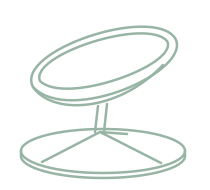
A movement break does not require a spinning chair, and a spinning chair is not desk seating simply because it fits in the room. Any equipment needs a suitable location and use consistent with the exact manufacturer's instructions.
If a chair is being considered, check how the user gets on, controls movement and gets off. Plan where it goes when not in use. Our children's spinning-chair checklist gathers those purchasing questions in one place.
Notice what works without turning it into a scorecard
After a trial, ask whether the routine was manageable and whether your child wanted to use it. Keep a brief note if you need to discuss it with school or a professional. One difficult day does not have to be treated as a failed strategy, and one easy day does not prove an outcome.
If school already uses a movement plan, ask staff what it involves before copying it at home. Share what is practical in your household and what your child communicates. Repeated discomfort, distress or participation difficulties are reasons to ask for individual advice.
A homework example without a complicated timetable
Imagine homework beginning at the kitchen table after a busy day. Before adding a new routine, parent and child look together at what is being asked. They agree on the first manageable step and on the familiar break choices available if a pause is wanted.
The next step after the pause might be reading one instruction together, finding a pencil or deciding which part needs help. The plan does not have to promise that a break will lead to finishing the whole task. It gives everyone a clearer picture of what comes next.
This is an illustrative way to organise a conversation, not a fixed homework method. A family might instead need to speak with school about the amount, format or timing of the work. A movement break should not become a way to avoid that wider discussion.
Build a menu your household can actually offer
Write down familiar options that suit the child, setting and available adult support. You might include a walk together, choosing a familiar piece of play or taking a quiet pause. Use words or pictures the child already understands.
Look at the menu from an adult's perspective too. If one option requires you to leave another child unsupervised or move furniture every time, it may not be an option you can offer in that moment. Replace it with a realistic choice rather than leaving an attractive promise on the card.
It is fine to have different menus in different places. A classroom, a family kitchen and a waiting room have different constraints. Explain the choices for the actual situation instead of assuming an option is always available everywhere.
Make the language easy to use
A simple invitation is often clearer than a long explanation: “Would you like a walk together, familiar play or a quiet pause?” Use whatever communication approach is already appropriate for your child. Do not require a spoken answer if that is not how they usually communicate choices.
Keep the next step equally concrete. “We will look at the first question together” describes something you can do. “You will be ready to concentrate” makes a claim about how the child will feel. Choosing the first kind of language helps everyone understand the plan without promising an outcome.
If the routine needs a signal for its beginning or end, agree one that makes sense to the child. Familiar pictures, words or objects may be more useful than introducing several new prompts at once. Ask the relevant professional for advice when a communication or support plan is already in place.
Review the practical details
After trying the arrangement, ask which part was easiest to understand and which part created more work. Could your child find the choices? Was an adult available when needed? Was the return to the task clear? Did the household have space for the option offered?
Change a practical detail you can describe, such as removing an unavailable choice or making the next step more specific. Avoid changing everything at once if you are trying to understand what made a difference. If the main difficulty remains unclear, share your observations with school or a relevant professional.
For a first version, create a small choice card using familiar options and decide how you will explain what happens afterwards. If you are also planning a dedicated space, use the sensory-corner guide . Keep the routine useful enough to repeat on an ordinary day, not just on the day you have time to prepare it.
Sources and further reading
- NHS Fife: top tips for movement breaks , written for educational routines.
- Sensory Chairs: planning a sensory corner on a budget .
These are general planning ideas for parents and carers. Choose activities appropriate to the child and setting, and follow professional advice where applicable.